25–27 February 2027

The
Programme

The Conference will take place over three days, combining plenary sessions, interactive dialogue, community engagement activities, camaraderie and networking. It will feature an opening and a closing ceremony.

Provisional programme
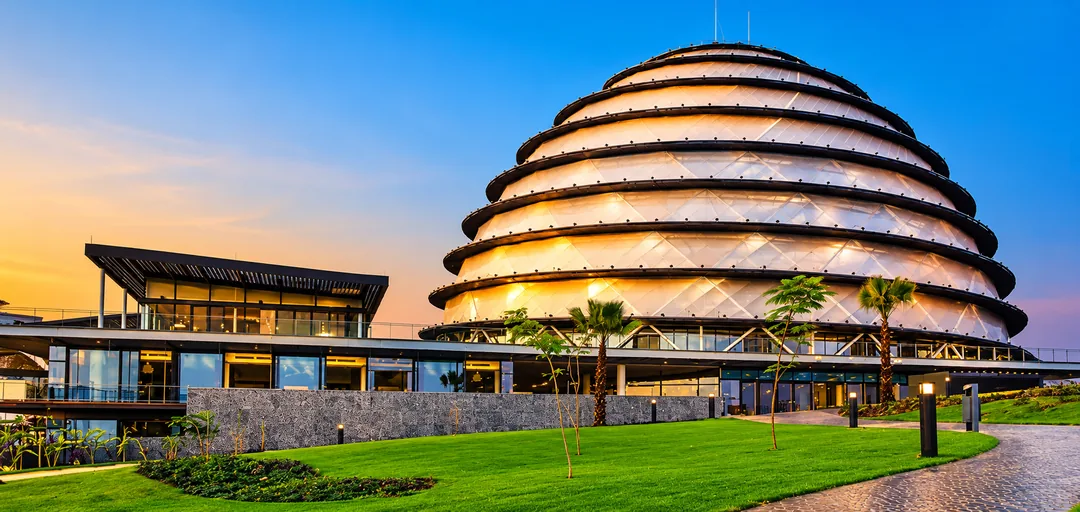
The Kigali Convention Centre dome at sunset

Days 1–2 follow the detailed programme proposal. Day 3 is proposed in the concept note; times are not specified.

Memory and Reflection — Visits to Genocide Memorial Sites

Session details

Guided visits to the Kigali Genocide Memorial and, depending on the group, other memorial sites in Rwanda. Reflection on memory, recognition of victims and intergenerational transmission in rebuilding societies.

Lunch and return of delegations

Opening Reflection — From Remembrance to Healing

Session details

A sober introduction linking the memorial visits to the collective responsibility to rebuild trust and prevent violence from recurring.

Panel — Rebuilding the Human Fabric: Rwanda’s Healing Journey and Global Lessons

Session details

Dialogue between Rwandan reconciliation experts, psychosocial practitioners, researchers and international actors who have supported societies after mass atrocities, civil wars or identity-based violence.

Break

Reflections — What Does Healing Mean Across Generations?

Session details

Audience questions and exchanges on individual and collective healing, intergenerational trauma, new generations and remaining challenges.

Closing Reflections

Discussion themes and questions

Panel discussions

Day 1 — Rebuilding the Human Fabric

Rwanda’s Healing Journey and Global Lessons, structured around four dimensions:

From survival to coexistence — and from coexistence to trust. How do you rebuild a nation when violence has deeply destroyed trust between its citizens? What is the difference between peaceful coexistence, reconciliation and true healing?

Healing the invisible wounds. What role do mental health, trauma care, community healing and psychosocial support play in a post-conflict society? How do we recognise wounds that remain invisible decades after the violence?

The next generation and the transmission of memory. How can the memory of atrocities be passed on without passing on fear, hatred or an identity defined solely by past wounds? What place should be given to young people who did not live through these events?

Rwanda in conversation with the world. What lessons can be placed in dialogue with the experiences of other societies that have lived through extreme violence? What are the limits of transposing national experiences?

More questions to stimulate plenary discussion

Reconciliation and forgiveness as pathways to peace: Can forgiveness ever be expected of those who have suffered the unimaginable?

When does remembrance become a foundation for peace, and how do we prevent history from becoming a source of renewed division?

Can institutions rebuild trust, or must trust first be rebuilt between individuals?

Recommended composition

A balanced mix of public institutions, civil society, researchers, trauma specialists and international experts. Include a younger-generation perspective, without asking survivors to recount traumatic experiences in public.

Panel 1 — A World in Motion, Divided Societies

Migration, Human Mobility, Identity and Belonging. The panel starts from a paradox: Africa aspires to greater regional integration and free movement of people and goods, yet tensions over belonging, nationality and access to resources continue to fragment societies.

It covers immigration, xenophobia, forced displacement and migration restrictions, as well as cross-border trade and economic interdependence between communities. Situations in South Africa, Kenya and other countries could serve as case studies, distinguishing official migration policies, administrative practices, and xenophobic rhetoric or violence.

Discussion themes

Mobility and belonging: Who has the right to belong to a society? How do perceptions of the outsider shape relations between communities?

Borders and livelihoods: How do borders, mobility restrictions and trade barriers affect livelihoods and social cohesion?

Migration and the politics of fear: Why do migrants sometimes become scapegoats for unemployment, inequality or insecurity?

Regional integration and inclusive development: How can national sovereignty, protection of citizens, human mobility and African integration be reconciled?

Questions to spark the plenary debate

Does a nation become stronger by protecting its borders, or by strengthening the bonds between those who live within and across them?

When economic opportunities become scarce, does diversity become a source of strength or a convenient explanation for inequality?

Expected outcome: two or three priorities the future Alliance could champion on human mobility, social cohesion and economic integration.

Panel 2 — Investing in Peace

Grassroots Peacebuilders, Peace Education and Inclusive Development. Peace is built and sustained in communities, long before and long after agreements are signed. Women’s groups, youth networks, community mediators, and faith and traditional leaders prevent violence and rebuild trust every day. Yet they are largely absent from high-level peace talks, and they receive only a small share of the resources devoted to peace.

The panel asks what it would mean to invest in peace as seriously as we invest in security or infrastructure: putting grassroots peacebuilders at the centre, funding the long-term work of peace education, and recognising that development which leaves people behind cannot produce lasting peace.

Discussion themes

Grassroots peacebuilders at the centre: What makes women, youth and community actors effective peacebuilders? How do we treat them as partners and decision-makers rather than as beneficiaries?

From the margins to the negotiating table: Why are grassroots peacebuilders so often missing from high-level peace processes? How can local voices shape national, regional and international decisions, in line with the Women, Peace and Security and the Youth, Peace and Security agendas?

What kind of investment? Peace education in schools and communities, mediation skills, trauma healing and community dialogue take years to bear fruit. How can funding become more flexible, long-term and locally led, instead of tied to short projects?

Inclusive development as a prerequisite for lasting peace: Jobs, livelihoods, access to services and a fair share of opportunity reduce the grievances that fuel conflict. How do we design development that heals divisions rather than deepening them?

Questions to spark the plenary debate

When peace is negotiated, who deserves a seat at the table: those who waged the conflict, or those who keep the peace in their communities?

Is peace underfunded because it becomes invisible when it works?

Can there be lasting peace when development leaves young people without work, voice or hope?

What would it take for a grassroots peacebuilder to be funded as a partner rather than as a beneficiary?

Recommended composition

Grassroots peacebuilders, including women and youth leaders, a Rotary Peace Fellow, a peace education practitioner, a development partner or funder, and a policymaker involved in peace processes.

Expected outcome: proposals on how the Alliance can channel Rotary resources — clubs, grants, Peace Fellows and partnerships — to locally led peacebuilding and peace education, and make inclusion a condition of the development initiatives it supports.
Panel 3 — The Battle for Trust in a Digital Age

Technology, Misinformation, Polarisation and the Future of Social Cohesion. The panel should move beyond the idea that misinformation is mainly a youth issue. Digital technologies now shape the opinions of every generation, perceptions of identity, political debate and trust in institutions. The same tools can foster civic participation, solidarity and access to information, while amplifying hate speech and polarisation.

Discussion themes

The erosion of shared truth: How can trust and dialogue be built when citizens no longer agree on the facts?

Digital polarisation and extremism: How can social media deepen identity, political or religious divisions and normalise extremist discourse?

Artificial intelligence and manipulation: What risks do AI-generated content, deepfakes and digital manipulation pose to social cohesion?

Technology for peace: How can digital tools encourage dialogue, critical thinking, civic participation and exchanges between communities?

Questions to spark the plenary debate

Can democracy, reconciliation and social cohesion survive in a world where we no longer agree on what is factual?

Are digital technologies connecting humanity, or creating increasingly isolated communities of belief?

Who is responsible for protecting social cohesion in the digital age: governments, technology companies, civil society, or citizens themselves?

Expected outcome: proposals on media and information literacy, intergenerational dialogue, digital responsibility and the use of technology as an instrument of peace.

Programme Proposal — Overview and Methodology
Event
Rotary International Peace Conference · Rwanda
Conference theme
One World, One Future: Bridging Divides, Building Peace
Dates
25–26 February 2027
Venue
Kigali, Rwanda
Day 1
Healing from the Unthinkable — memory, reflection and international dialogue
Day 2
Bridging Divides, Building Peace — main conference in the presence of the President of Rotary International: three panels, each followed by a plenary discussion

After the official opening ceremony, three panels each open a question; each is followed by a plenary discussion in which all participants respond, challenge the panellists and put forward proposals for the Alliance. The day closes with the presentation of the proposed Rotary Alliance for Inclusive Peace and Development.

Read the complete conference documents ↗

25–27 February 2027 · Kigali, Rwanda

Rotary Presidential
Peace Conference

Register